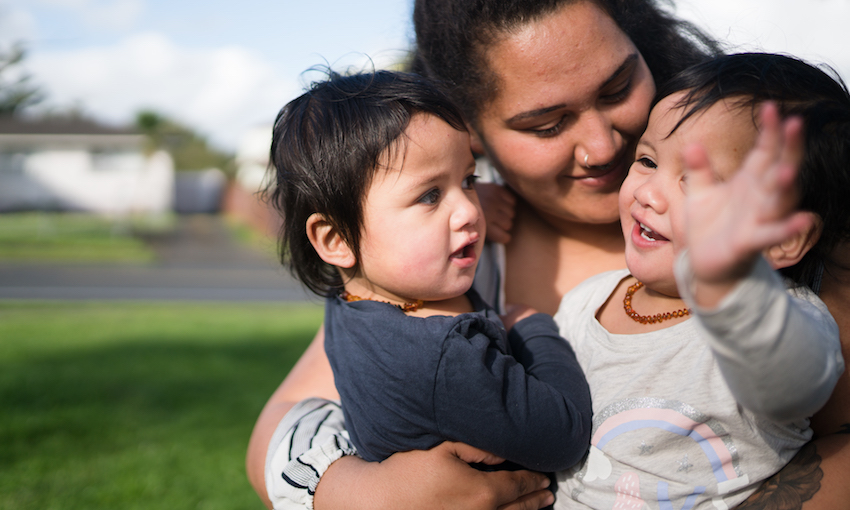
How non-Māori students play a part in te reo revitalisation

A research first has highlighted the important role of non-Māori learning te reo for the revitalisation of the language. Charlotte Muru-Lanning spoke to Dr Will Flavell about where the language is going.  Before he started learning te reo Māori, Dr Will Flavell (Ngā Puhi, Ngāti Whatua, Ngāti Maniapoto, Tainui) was already fluent in English and … Read more

Why te Tiriti should place a limit on the supremacy of parliament

Ahead of Waitangi Day, Jacinta Ruru and Jacobi Kohu-Morris imagine an alternative to New Zealand’s constitutional framework that gives Te Tiriti o Waitangi the mana it deserves and Māori a meaningful seat at the table.  In the early 1980s, fresh from law school, Sir Justice Joe Williams (Ngāti Pūkenga, Te Arawa) wrote ‘Maranga Ake Ai’ … Read more

The history of the n-word in New Zealand

A Pūhoi pub is refusing to remove a piece of memorabilia bearing the n-word from its walls. Dr Lachy Paterson looks at the history of the word here, and New Zealand’s complicity in Britain’s shameful slave trading past. Content warning: This article contains racist language and images. On a pub wall in Pūhoi, covered in … Read more

Language, and more: The challenges for kura Māori students arriving at university

Raiha Cook grew up attending kura Māori, but when she decided to study at the University of Otago she found the move from te ao Māori to European-style learning difficult. Now she’s researching that transition to help make it easier for students to feel safe at mainstream universities. Set in the spray of Raukawa Moana, … Read more

Bicultural, bilingual, bijural: A plan for a new model of legal education in Aotearoa

OPINION: It is time to integrate tikanga Māori into law schools to create a truly bicultural legal system, writes University of Otago law professor Jacinta Ruru.  I see, hear, feel racism. Every day. Each morning, I begin my trek from carpark to office, walking across the campus lawns, alongside the Ōwheo river (that everyone calls … Read more

Systemic barriers are keeping Māori with eating disorders from treatment

A new study shows systemic gaps in the health system are making it much harder for Māori with eating disorders to access the specialist support they need. Alice Webb-Liddall reports.   Social barriers, a lack of culturally appropriate services and stigma mean Māori are much less likely to have access to specialist treatment for eating disorders, … Read more

For 40 years, Oscar Temaru has protested the French presence in the Pacific

The Tahitian leader has refused to stop fighting against nuclear testing and its effects on his people. New Zealanders must do the same, writes Jenny Te Paa-Daniels. For those with memories of Mururoa, the name Oscar Temaru ought to be synonymous with the atoll and the protest against French nuclear testing in the Pacific. For … Read more

Covid-19 exposed equity issues for Māori, and now is the perfect time to fix them

As we face what seems to be the tail end of the first (and hopefully final) wave of Covid-19 in Aotearoa, research is being done to examine whether people of different ethnic and socio-economic statuses have the same ability to respond to the crisis.  New Zealand’s response to Covid-19 has been heralded all over the … Read more

Awakening the taniwha: Unleashing community potential from the rubble of Covid-19

Covid-19 has reset our understanding of the world. From this crisis comes opportunity, and University of Otago professor Merata Kawharu (Ngāti Whātua, Ngāpuhi) believes it’s a chance to apply traditional principles to our new normal.  In a really short time, we have become attuned to doing things very differently. In just a few months, Covid-19 … Read more

Why more Māori professors are essential for Aotearoa’s universities

The number of Māori academic staff remains disproportionately low at New Zealand universities. Simon Day spoke to three newly appointed Māori professors at the University of Otago about why putting te ao Māori at the centre of their work is so important.  Māori participation in tertiary education is steadily increasing. According to the Ministry of … Read more

Ngā manu ō Aotearoa: the shared history of birds in our Polynesian legends

The birds of Polynesian legend are part of birth, death, and everything in between. Now, a PhD thesis from the University of Otago undertakes the first ever in-depth exploration into the manu of mythology. From the flittering pīwakawaka that woke Hine-nui-te-pō and caused the death of Maui, to the Tahitian doves bringing figs to earth, … Read more

A life together: The rise of cohousing, papakāinga and the ‘social mortgage’

It’s a way of living that is often mistaken for either a ‘hippy commune’ or a boarding house, but cohousing is slowly becoming a viable solution to New Zealand’s growing housing needs. It’s also a way of fighting the isolation and loneliness that is harming our collective wellbeing. The quarter acre section is a legacy … Read more

Celebrating Te Huka Mātauraka, a home away from home for Dunedin’s Māori students

Te Huka Mātauraka, the University of Otago Māori Centre, celebrates its 30th birthday this year as a crucial part of life for the university’s Māori students. Its manager Pearl Matahiki and student Sarafina Tipene reflect on what the centre means for them. In 2017 when Sarafina Tipene left home to attend the University of Otago … Read more

Corrections’ plan to use te ao Māori to reduce Māori incarceration rates

Hōkai Rangi is a recently-released strategy aiming to drastically lower the ratio of Māori in prison in New Zealand, using Māori strategy to do so. Alice Webb-Liddall spoke with Tuari Potiki, the University of Otago’s director of the Office of Māori Development, about what these changes mean for incarcerated Māori and their whānau.  Over half … Read more

Te Rā the sail, last of its kind

A team of University of Otago researchers and weavers will unlock the secrets of one of te ao Māori’s most precious taonga for the first time in more than 200 years. The late Hec Busby was in his 50s when the Hawai’ian ocean voyaging waka Hokule’a landed at Waitangi in 1985. By that point, most … Read more

Creating a place for Māori in the University of Otago’s 150 year history

When the University of Otago was founded 150 years ago the interests of local Māori were disregarded. But now, in the last 50 years, engagement with tangata whenua has become an essential part of the university’s identity. New Zealand’s first university was co-founded by a controversial Scottish politician determined to make something of himself in … Read more

Maya meet Māori: the indigenous people learning from each other in Aotearoa

As part of the University of Otago’s Maya-Māori cultural economy exchange last month, four Mayan academics visited New Zealand to share their experiences of colonisation. Alice Webb-Liddall spoke to the group about what indigenous people can learn from their shared experiences.  “It’s easy to get stuck in a bubble of your own survival,” says Maria … Read more

This is us – but it does not have to be

Six days after the terror attack in Christchurch, the University of Otago launched its participation in the Give Nothing to Racism campaign. At the launch, Tuari Potiki (Kāi Tahu, Kāti Mamoe, Waitaha) the director of the Office of Māori Development spoke of the history of racism he, his whānau and marae have faced. Here is … Read more

What Cook missed when he landed

The current New Zealand innovator of the year, Ian Taylor, is on a mission to sear the real story of New Zealand’s discovery into the minds of a generation of New Zealanders.  In 1990 a team from the University of Otago’s small computer science department entered the world’s foremost test of computational skill: the ACM … Read more

One family, three generations of Māori doctors

Jack Tapsell is the product of a family dedicated to the health and wellbeing of Māori. The recent University of Otago medical graduate talks to Leonie Hayden about carrying on the legacy of his father and grandfather. As descendants of Phillip Tapsell, a Danish sailor who settled at Maketū near Rotorua in 1830, and Te Arawa … Read more

A tale of tū cities: The role of Māori thinking in shaping our urban future

In her ceremonial inaugural lecture ‘Whakawhanaketanga toitū: A tale of tū cities’, University of Otago Professor Michelle Thompson-Fawcett (Ngāti Whātua) examined the concepts of “identity in place” and mapped how these ideas have shaped her career.  The concept of ‘whakawhanaketanga toitū’ is the notion of developing and improving our activities and lives in a way that is sustainable. ‘Sustainable development’ … Read more

How whakapapa led to one doctor losing her stomach and gaining her life

In the age of advanced genetics, whakapapa is a powerful tool against hereditary illness. Don Rowe talks to Dr Karyn Paringatai, the stomach-less doctor reconnecting whānau to save lives. Dr Karyn Paringatai has lived eight years without her stomach. After the organ was completely removed in 2010, Paringatai’s oesophagus was sewn to her small intestine, creating … Read more

‘We’re setting whānau up to fail’: rethinking the Māori approach to obesity

Physiotherapist Ricky Bell pursued groundbreaking research into holistic approaches to obesity and Māori because that’s what his community needed… even if it meant his reputation as a fisherman had to suffer. Ngāti Hine rangatira Te Ruki Kawiti initially refused to sign Te Tiriti o Waitangi, believing it would lead to further loss of land for Māori. … Read more

How Ngāi Tahu turned a landmark settlement into a billion dollar iwi empire

Ngāi Tahu spent 150 years in cultural and economic poverty, dispossessed of the vast majority of their whenua and mahinga kai. Today, 20 years on from their landmark settlement with the Crown, they’re sitting atop a billion dollar pūtea, writes Don Rowe. At the time of the signing of the Treaty of Waitangi, almost half … Read more

Whakawhiti te rā: New Zealand sport, haka and the Māori perspective

From an erratic flailing of limbs to the psychological powerhouse we know today, little is known about how haka developed into a steadfast tradition in New Zealand sport. Leonie Hayden talks to post-grad student Nikki Timu about how it all started and how Māori can shape its future.  Kapa haka has always been important to Nikki … Read more

The Māori lawyer fighting for indigenous rights all over the world

With a career that has taken her from Whakatāne to Otago, to the hallowed halls of Harvard, to the front line of Standing Rock, lawyer Natalie Coates has fought for Māori and indigenous rights wherever she’s been needed.  She has appeared in the Supreme Court for the Urewera ‘anti-terror’ raids case, and volunteered in ‘war-like’ … Read more

‘The key word is manaakitanga’: Trading indigenous knowledge with First Nations peoples

As winter passes and new life takes hold in New Zealand, indigenous guests from far abroad have arrived to exchange cultural knowledge.  It’s more than 12,000 kilometres from Salem, Oregon, to Dunedin, Otago – an epic journey across the Pacific – but for students like Cherokee Miranda Livers, it’s a pilgrimage for a cultural immersion … Read more

The power, importance, and future of the Māori roll

Māori are in the process of choosing which electoral roll to vote from. Simon Day spoke to Dr Paerau Warbrick about what that decision means.  I grew up firmly in te ao Pākehā. I also grew up very aware of my Tainui whakapapa, and the story of grandfather’s family – his father a legendary Māori … Read more

Otago’s Māori students are raising their voices

As the University of Otago Māori student body grows, so too do their aspirations for a space to call their own. In March, the University of Otago’s Vice Chancellor Harlene Hayne announced a 10% increase in Māori students, and over a decade of uninterrupted year-on-year growth in both Māori and Pacific enrolments. The university says its … Read more